
Start from what you are firing, not from a model number.
Deltech builds high-temperature furnaces for glass melting and fining, calcination and powder processing, sintering and firing of technical ceramics, annealing and stress relief, materials and refractory testing, and the electrification of gas-fired processes — to 2000 °C in air, standard or engineered to the process.

Why this page exists
Furnace manufacturers organize their websites the way they organize their factories — by furnace type. Buyers do not think that way. An engineer scaling a calcination step is not searching for a rotary tube furnace; they are searching for a way to calcine at volume. A researcher writing a grant is not searching for a bottom-loading furnace; they are searching for something that will hold 1500 °C under a controlled atmosphere with a certification their institution will accept. This page starts where they start.
Find your process
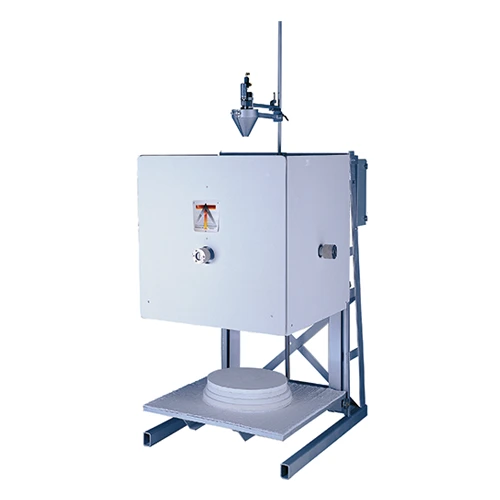 Glass melting and fining →Melting and fining specialty glass in air.
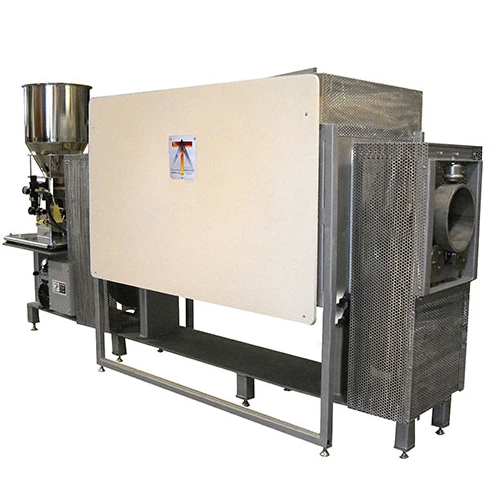 Calcination, reduction and powder processing →Batch, rotary and continuous, built for scale-up.
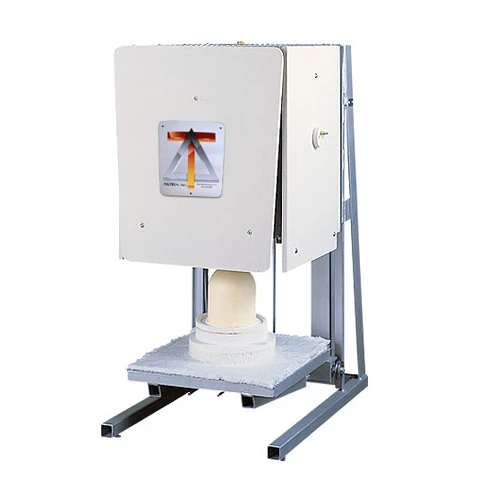 Sintering and firing of technical ceramics →Repeatable profiles and atmosphere control.
 Annealing and stress relief →Glass and metal, where geometry drives design.
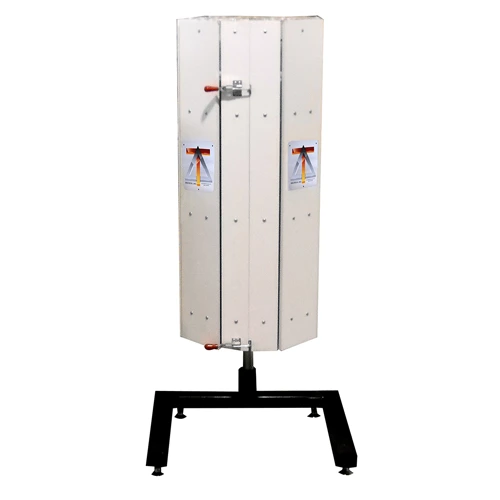 Materials and refractory testing →Qualification at 1800–2000 °C in air.
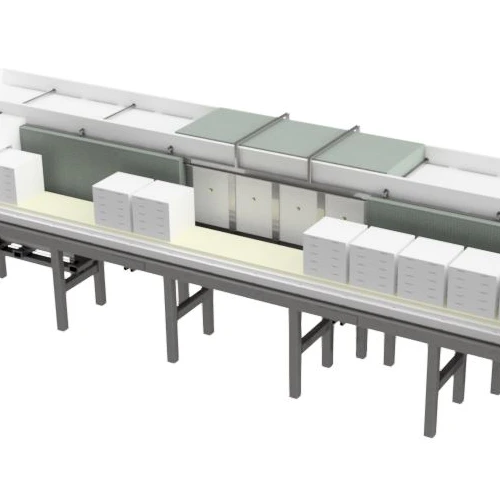 Electrifying a gas-fired process →Matching the thermal profile, not just the peak.
Glass melting and fining
Batch chemistry, crucible compatibility, hold time and uniformity. Melting and fining specialty glass demands stable temperature across the melt and an atmosphere that does not alter the chemistry. Deltech’s 2000 °C-in-air capability matters here more than almost anywhere else: glass compositions that react badly to vacuum or inert gas can be melted in air at temperatures most equipment can only reach under vacuum. Standard crucible working volumes run from 5 in. diameter × 6 in. tall (RS-OS) up to 18 in. × 16 in. (RS-1816), with custom rectangular and larger sizes built to order; crucibles are alumina, graphite or platinum. See glass melt furnaces.
Calcination, reduction and powder processing
The scale-up conversation. A calcination step that works in a laboratory crucible frequently stalls on the way to production, because batch volume, gas exchange and residence time all change at once. Deltech builds rotary, tube and continuous systems for calcination, reduction and powder processing, including rotary systems and tunnel kilns with continuous charge and discharge at temperature — the step that most often decides whether a process scales at all. Calcination, reduction and powder processing furnaces.
Sintering and firing of technical ceramics
Profile control, atmosphere and repeatability. Oxide ceramics, bioceramics and advanced technical ceramics need a ramp and soak profile held identically run after run, often under a specified atmosphere. Deltech builds both standard and engineered furnaces for this work, with multi-loop programmable control and documented uniformity. Aerospace ceramic and composite work sits in this group as well. See our guide to kiln furnace design for the control and uniformity considerations.
Annealing and stress relief
Geometry usually drives the design. Annealing glass tube stock horizontally is a different machine from annealing pressed parts in a batch. The controlling variables are how the work is supported, how evenly it is heated and how slowly it can be brought down — which is why annealing requirements so often end up as a custom build. See metal annealing furnaces.
Materials and refractory testing
Testing under service conditions, not under vacuum. Refractory and materials qualification is only meaningful if the test atmosphere matches the service atmosphere. Testing at 1800–2000 °C in air rather than under vacuum or inert gas is where Deltech’s hot-zone design is most clearly differentiated, and it is why laboratories and refractory producers come to us for this work specifically. The distinction is structural rather than marketing: vacuum furnace hot-zone components cannot withstand sustained operation in air, so equipment built for vacuum service cannot simply be run open to atmosphere at these temperatures. Our guide to laboratory furnace applications covers the research side of this work. See materials test furnaces.
Electrifying a gas-fired process
Matching a thermal profile, not just a peak temperature. Replacing a gas-fired kiln or furnace with electric heating is now one of the most common reasons manufacturers contact us — driven by energy cost, emissions commitments and process control. The engineering problem is not reaching the temperature. It is reproducing the heat distribution, atmosphere and thermal mass behavior the existing process depends on, so the product coming out the other end is unchanged. Our guide to electric tunnel kilns walks through how that is done in practice.
If your process is not listed
These are the six we see most often, not the limit of what we build. Deltech has been engineering furnaces around specific processes since 1968, and a significant share of what we ship was designed for a process nobody had asked us about before. Describe what you are doing and we will tell you whether it is a standard furnace, a modified one, or a system that has to be engineered from the process out.
Frequently asked questions
What processes can a high-temperature furnace be used for?
The most common industrial and research processes are glass melting and fining, calcination and powder processing, sintering and firing of technical ceramics, annealing and stress relief, materials and refractory testing, and replacing gas-fired heating with electric. Each places different demands on temperature, atmosphere, loading and control.
How do I choose a furnace for my process?
Start with the material, the peak temperature and the atmosphere it requires, then the size and form of the work and how it moves through the hot zone. Those four decide most of the design. Throughput, utilities, floor space and any compliance requirement decide the rest.
What furnace do I need for calcination?
It depends on volume and continuity. Laboratory and pilot calcination is usually a tube or box furnace; production calcination usually requires rotary or continuous equipment with charge and discharge at temperature. The transition between the two is where most scale-up projects stall.
Can an electric furnace replace a gas-fired kiln?
In most cases yes, but the engineering problem is reproducing the thermal profile rather than the peak temperature. Heat distribution, atmosphere and thermal mass all behave differently, and the design has to account for that so the fired product is unchanged.
Why does testing in air instead of vacuum matter?
Because most materials serve in air. A refractory or ceramic qualified under vacuum or inert gas has been tested under conditions it will never see in use. Deltech furnaces reach 2000 °C in an air atmosphere, which allows qualification under service conditions. Vacuum furnace components cannot withstand sustained operation in air, so this is not a setting a vacuum furnace can be switched into.
Do you build standard furnaces as well as custom ones?
Yes. Deltech offers a range of standard furnace types and will say when a standard unit does the job. Custom engineering is for processes a standard envelope cannot serve.
Describe your process.
Not sure which of these fits? Tell us what you are firing, at what temperature and in what atmosphere — an engineer will point you at the right page, or tell you it needs a custom build.
Talk to an Engineer · (888) 506-3653Explore Custom EngineeringRequest a Budgetary FigureDeltech Furnaces · Custom high-temperature furnace design and manufacturing since 1968
1007 E. 75th Avenue, Unit E, Denver, CO 80229 · (888) 506-3653
ISO 9001:2015 Certified · ASME NQA-1:2008 Quality Assurance Available · UL 508A Listed Control Systems · Member, The American Ceramic Society