
Time for a rebuild? Maybe.
No one wants to unnecessarily invest down time, money, and labor into replacing furnace parts. But avoiding even higher costs and longer furnace down time due to catastrophic failures should also be of paramount importance. Catastrophic failures, such as collapsed roofs, may result in total loss of insulation, elements, and yes, product in process.
Determining what parts need replaced and when can be a challenge. You can visit the Maintenance Guides section on our Tutorials page for guidelines on inspecting and maintaining your furnace. However, if you are unfamiliar with what’s caused by normal wear and tear vs what is a threat to furnace integrity and performance, making the right call can be difficult.
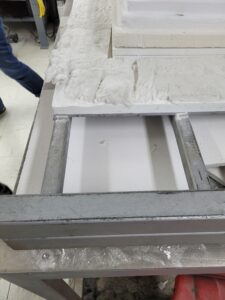
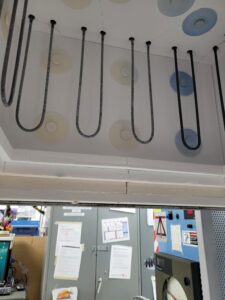
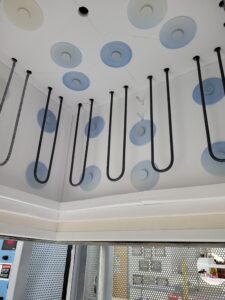
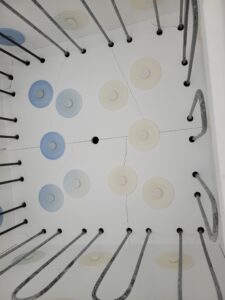
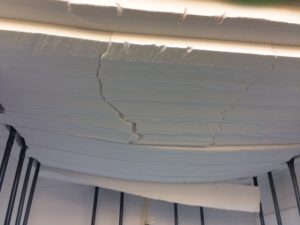
Please don’t hesitate to ask Deltech technical support for assistance. That’s what the customer who sent the pictures you see below did: asked for advice. They were concerned about the cracking, fearful of disaster if they operated the furnace at high temperatures.
We recommended against a rebuild and continuing to high fire. Our reasoning: The lining was overall in good condition and not allowing heat loss. Roof cracking is a normal occurrence with insulation materials and is controlled by the roof anchors. The ledge cracking is normal and acts as an expansion joint.
More marked damage and deterioration would likely have resulted in a different recommendation. But it’s important to note that parts can be replaced as needed, thus often obviating the need for a total rebuild.
See an example of a catastrophic failure and read about the cause. The insulation shows significant loss of integrity including severe shrinkage from exposure to overtemperature conditions.
For a less obvious case, view the following picture of a furnace roof exhibiting considerable sagging and layer separation. In this case, the damage was too great to repair and shore up with anchors. Replacing the roof was the best course of action to avoid roof collapse and loss of heating elements, damage to other parts of the furnace, and product loss.
One final note: In most cases, if cracks are less than 1/8″/3.2mm wide, it is best not to repair. This is because repairs at this stage can actually cause more damage.

Contact us for advice, assistance, and replacement parts.
Time for a rebuild? Maybe.